
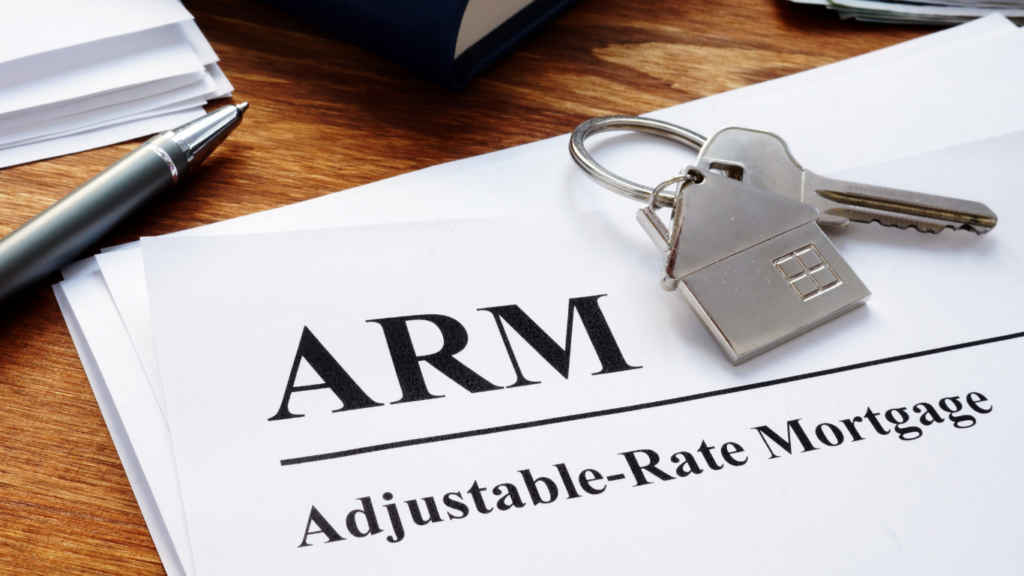
More Buyers Are Choosing ARMs — Here’s Why It Might Be a Smart Strategy
ARM’s (Adjustable-Rate Mortgages) were commonly used by purchasers from 2004 – 2006. Roughly 35% of mortgages originated during those years were “adjustable”. After the 2008 housing/fiscal crisis, caused in part by risky mortgage loan products including ARMS, the number of ARM transactions made in the US plummeted.
That seems to be changing…
What Exactly Is an Adjustable-Rate Mortgage (ARM)?
An ARM is a home loan with an interest rate that adjusts over time. Historically, you start with a lower, fixed interest rate for a set period—typically 5, 7, or 10 years—and then the rate adjusts at regular intervals based on market conditions.
For example, a 7/1 ARM locks in your rate for seven years, then adjusts annually. A 10/6 ARM means 10 years fixed, then adjusts every six months. These loans are structured with caps to limit how much your rate (and payment) can increase at each adjustment or over the life of the loan.
Until recently there was not much incentive for borrowers to consider an ARM because (unlike the ARMS offered 2004-2008) there was virtually no disparity between rates offered on ARMS, and those offered on a 30-year fixed rate loan. In the past 30 days that has changed. As of June 15, Mortgage Daily News reported an average rate of 6.88% and 6.90% for a 30-year fixed rate versus the 6.625% and 6.45% being offered on a 5-year Adjustable-Rate Mortgage.
Why More Buyers Are Taking a Second Look
Many purchasers anticipate rate cuts ahead. By using an ARM now, they will enjoy a slightly lower rate during the initial “fixed” period. Some have the hope that, instead of increasing on the adjustment date, the rate will
remain the same or possibly come down. Experts say that the current flatter yield curve supports that theory.
While ARMs aren’t one-size-fits-all, they make a lot of sense for certain buyers, especially those with short- to mid-term homeownership plans or who are financially stable enough to absorb a future rate increase if needed.
An ideal ARM borrower often:
- Plans to live in the home for fewer than 5, 7 or 10 years.
- Has a stable income and good credit or anticipates increases in income that would allow them to keep up with increases, just in case… their bet on the direction of rates turns out to be wrong.
- Has a financial safety net in case payments rise
- Understands how interest rate adjustments work.
This isn’t about gambling on the market—it’s about strategic planning. That’s where an experienced mortgage loan officer becomes invaluable. They can help you compare options, understand caps and margins, and decide whether an ARM aligns with your financial goals.
ARMs today are far more borrower-friendly than they were in decades past. Most no longer carry prepayment penalties, and most feature rate caps that protect against sharp increases. And if rates go down, you may even benefit from lower payments and, of course, borrowers always have the option to refinance at a fixed rate when the time is right.
Ultimately, the risks of an ARM are manageable when you understand them—and plan for them.
The Bottom Line
In a high-cost housing market like Denver’s, flexibility matters. An adjustable-rate mortgage could be a smart, strategic choice; especially when guided by the right mortgage professional. Whether you’re buying your first
home, upsizing for a growing family, or simply exploring ways to maximize your budget, it’s worth having a conversation with a trusted loan officer.
If you have questions about the right loan for your life plans, whether that is an ARM or something else entirely, reach out to your Mortgage Loan Specialist.
Need a Mortgage Loan Specialist? Call our office at (303) 990 – 2992 anytime.

